

Building a resume that stands out goes way beyond listing your past jobs and basic details. Studies show that over 75% of resumes are never seen by a real person because they do not match automated screening requirements. Most people think a generic template will do the trick, but that approach actually sends your application straight to the virtual trash. The secret is all about precision and strategy—your resume is your personalized billboard and how you build it changes everything.
Table of Contents
Quick Summary
| Key Point | Explanation |
| 1. Analyze Job Descriptions Thoroughly | Carefully examine job postings to extract essential skills and qualifications that align with your experiences. |
| 2. Organize Professional Experiences Chronologically | Create a master document listing all experiences to aid in crafting tailored resumes for specific applications. |
| 3. Use Strong Action Verbs in Bullet Points | Craft impactful bullet points with clear action verbs to highlight achievements and contributions effectively. |
| 4. Quantify Achievements for Importance | Utilize numbers and metrics in your descriptions to showcase measurable impact and demonstrate your professional value. |
| 5. Review and Edit Carefully for Clarity | Go through your resume multiple times to refine content, fix errors, and ensure clarity in your professional narrative. |
Step 1: Analyze Job Descriptions for Tailoring
Tailoring your resume begins with strategic job description analysis, a critical skill for transforming generic applications into targeted professional documents. Your goal is to decode exactly what employers want and map your skills precisely to their requirements.
Decoding the Job Description Landscape
Successful resume writing demands a forensic approach to job descriptions. Start by thoroughly reading each job posting multiple times, treating it like a treasure map revealing hidden employer expectations. Look beyond surface level job titles and responsibilities. Professional recruiters embed specific keywords, required skills, and subtle performance expectations within these documents.
When examining job descriptions, pay special attention to three core elements: required qualifications, preferred skills, and implied performance indicators. Highlighted or bolded requirements are particularly important – these typically represent non negotiable criteria that directly impact your application’s success. For instance, a software engineering role might emphasize “5+ years experience with Python” or “proven track record of delivering scalable solutions.”
Strategic Matching Techniques
To effectively match your background, create a systematic comparison between the job description and your professional experiences. Use a side by side approach where you align your professional achievements with specific job requirements. This means carefully selecting resume content that demonstrates not just possession of skills, but practical application of those skills.
The most effective resume writers understand that keyword matching goes beyond simple copy pasting. You want to strategically integrate industry specific terminology while maintaining authentic representation of your professional journey. Consider creating a separate working document where you map out precise alignment between job description requirements and your professional experiences.
Some critical areas to analyze include:
-
Technical skills and certifications
-
Years of professional experience
-
Industry specific terminology
-
Quantifiable achievements matching job expectations
By meticulously analyzing job descriptions, you transform your resume from a generic document into a targeted marketing tool specifically designed to capture employer attention.
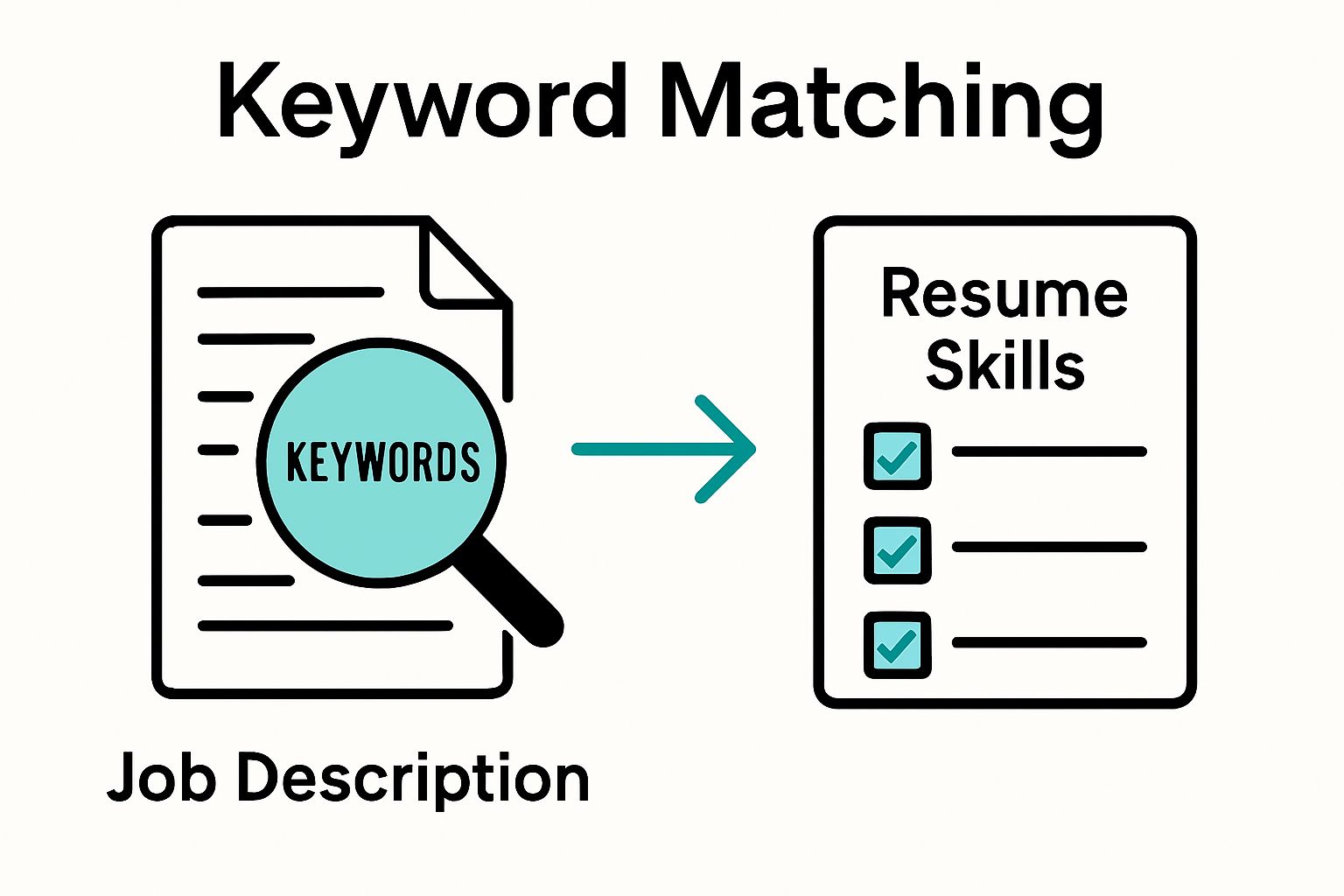 Each tailored resume becomes a precise professional narrative demonstrating why you are the ideal candidate for that specific role.
Verification is key: If you can confidently say your resume reflects 70-80% of the job description requirements using your genuine professional experiences, you have successfully completed this crucial first step in resume writing.
Step 2: Gather and Organize Your Relevant Experience
Gathering and organizing your professional experiences is the foundational work that transforms a generic resume into a compelling professional narrative. This step requires strategic introspection and systematic documentation of your career journey.
Creating Your Professional Experience Repository
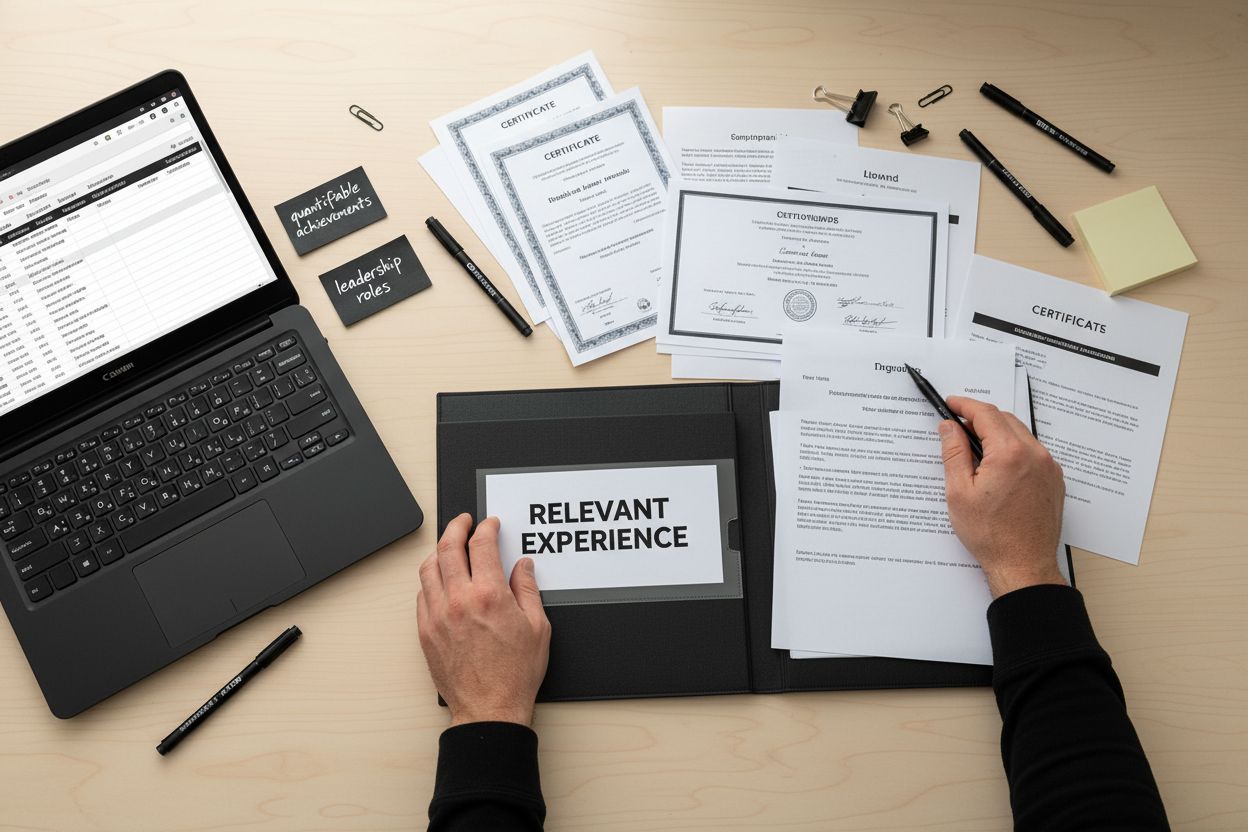
Begin by creating a comprehensive master document that captures every professional experience, including full time roles, part time work, internships, volunteer positions, academic projects, and significant extracurricular achievements. Do not filter or judge your experiences yet – this initial stage is about comprehensive collection. Think of this as assembling raw materials before constructing a precise architectural blueprint.
Organize your experiences chronologically and by category. Professional roles should include complete details: job title, organization name, employment dates, location, and a preliminary list of key responsibilities and achievements. For each experience, write detailed descriptions that highlight not just what you did, but how you performed and what made your contribution unique.
Strategic Experience Mapping
Transform your raw experience repository into a strategic asset by critically evaluating each entry through the lens of potential employer requirements. This means going beyond listing job duties and focusing on quantifiable achievements and transferable skills. Instead of saying “managed social media accounts,” specify “increased brand engagement by 45% through targeted content strategy.”
Pay special attention to experiences that demonstrate leadership, problem solving, innovation, and cross functional collaboration. These qualities are universally valued across industries. For recent graduates or career transitioners, this might mean highlighting academic projects, internships, or volunteer work that showcase professional competencies.
Some critical areas to document comprehensively include:
-
Professional work history
-
Academic and research achievements
-
Volunteer and community leadership roles
-
Technical and soft skill demonstrations
-
Awards and professional recognitions
If you are choosing a career path across different life stages, this systematic approach becomes even more critical. Your goal is creating a flexible, comprehensive experience inventory that can be dynamically tailored for different job applications.
Verification is straightforward: If you have a detailed, chronological document capturing all professional experiences with specific achievements and quantifiable outcomes, you have successfully completed this crucial resume preparation step.
Step 3: Create a Professional Resume Format
Creating a professional resume format is about presenting your professional story with clarity, precision, and visual appeal. Your resume is a strategic marketing document that must instantly communicate your professional value to potential employers.
Designing a Clean Professional Layout
Choose a clean, modern resume format that prioritizes readability and professional aesthetics. Typography and white space are critical elements that determine how easily a recruiter can scan and understand your professional narrative. Select professional fonts like Arial, Calibri, or Times New Roman in 10-12 point size for body text, with slightly larger headers. Maintain consistent font sizes and styles throughout the document to create visual hierarchy and guide the reader’s eye.
Standard resume formats typically include key sections: contact information, professional summary or objective statement, work experience, educational background, and additional skills. The order and emphasis of these sections depend on your career stage and industry. Recent graduates might prioritize education, while experienced professionals should lead with professional experience.
Strategic Content Structuring
Each resume section must be purposefully designed to highlight your most compelling professional attributes. Your professional summary should be a concise 3-4 line narrative that captures your core professional identity, key skills, and career objectives. Work experience entries should follow a consistent format: job title, company name, employment dates, and bullet pointed achievements that demonstrate measurable impact.
Pay close attention to formatting details that signal professionalism. Use consistent alignment, appropriate margins (0.5-1 inch on all sides), and ensure your document looks equally polished in digital and printed formats. Avoid excessive design elements or colors that might distract from your professional content.
Consider these critical formatting principles:
-
Maintain consistent font and formatting throughout
-
Use clear, legible typography
-
Ensure adequate white space for readability
-
Align text and sections professionally
-
Limit resume to 1-2 pages depending on experience level
The goal is creating a resume that functions like a professional billboard – immediately communicating your value proposition and inviting deeper exploration. Each formatting choice should strategically support your goal of appearing competent, professional, and perfectly suited for the role.
Verification is straightforward: If your resume looks clean, is easy to read at a glance, maintains consistent formatting, and highlights your most significant professional achievements, you have successfully completed this critical resume development step.
Step 4: Write Compelling Bullet Points and Summaries
Crafting compelling bullet points and professional summaries transforms your resume from a simple document into a powerful narrative that captures employer attention. This step is about strategically communicating your professional value through precise, impactful language.
Constructing Powerful Professional Narratives
Bullet points are not mere job descriptions but strategic storytelling opportunities. Each bullet point should demonstrate professional impact, following a clear structure that highlights your unique contributions. Start by using strong action verbs that immediately convey dynamism and capability. Verbs like “orchestrated,” “transformed,” “developed,” and “pioneered” communicate more professional energy than passive terms like “responsible for” or “worked on.”
The most effective bullet points follow a specific formula: action verb + specific task or project + quantifiable result or professional impact. Instead of writing “managed social media accounts,” craft a more compelling narrative like “Developed targeted social media strategy that increased brand engagement by 45% and generated 10,000 new follower interactions within six months.”
Strategic Language and Measurement
Quantification is the secret weapon of powerful resume writing. Employers are seeking professionals who can demonstrate measurable contributions. Whenever possible, include specific numbers, percentages, dollar amounts, or other concrete metrics that illustrate your professional achievements. These quantifiable details transform abstract job responsibilities into clear evidence of your professional capabilities.
Your professional summary should function as a concise elevator pitch. In 3-4 lines, capture your professional identity, core competencies, and most significant career achievements. Think of it as your professional brand statement – a compelling snapshot that immediately communicates your unique value proposition to potential employers.
Consider these critical bullet point principles:
-
Use strong, specific action verbs
-
Quantify professional achievements
-
Focus on impact, not just responsibilities
-
Align language with job description keywords
-
Keep descriptions concise and powerful
Professional communication is an art of strategic brevity. Every word in your resume should earn its place by demonstrating your professional excellence.
Your goal is creating a document that doesn’t just list what you’ve done, but powerfully illustrates what you can accomplish for a potential employer.
Verification is straightforward: If your bullet points are specific, measurable, action oriented, and clearly demonstrate professional impact across different roles, you have successfully completed this critical resume development step.
Step 5: Review and Edit for Clarity and Impact
Reviewing and editing your resume is the critical final stage that transforms a good document into an exceptional professional narrative. This process demands a meticulous approach that goes beyond simple proofreading, focusing on strategic refinement and professional presentation.
Precision and Professional Polish
Begin your review by creating physical and temporal distance from your initial draft. Professional editing requires objectivity, so wait at least 24 hours after completing your first version before conducting a comprehensive review. This mental reset allows you to approach your resume with fresh eyes, identifying potential improvements you might have missed during initial drafting.
Read your resume multiple times, each pass focusing on a different aspect of quality. First, check for technical accuracy: spelling, grammar, punctuation, and consistent formatting. Next, evaluate content clarity – ensure each section communicates your professional value proposition concisely and powerfully. According to University of Wisconsin writing experts, even minor errors can signal potential performance issues to employers.
Strategic Content Refinement
Your editing process should be ruthlessly strategic. Every word must earn its place on the document. Eliminate unnecessary phrases, redundant descriptions, and any content that does not directly support your professional narrative. Focus on creating a lean, powerful document that communicates maximum impact with minimal text.
Pay special attention to alignment between your resume and the specific job description. Review your keywords, achievements, and professional summary to ensure they precisely match employer expectations. This means potentially making subtle adjustments for different job applications, transforming your master resume into a targeted professional tool.
Consider these critical editing principles:
-
Read the document backwards to catch spelling errors
-
Use digital and print review methods
-
Get external professional feedback
-
Verify consistent formatting
-
Eliminate unnecessary words
Remember that your resume is a dynamic marketing document. What worked perfectly for one application might need refinement for another. Treat each version as a living document, continuously improving and adapting to represent your most current professional self.
Verification is clear: If your resume is error free, communicates your professional value concisely, and feels like a powerful representation of your capabilities, you have successfully completed this crucial resume development step.
Below is a verification checklist to help ensure you have completed each essential stage of resume writing as described in this article.
| Step | Verification Criteria | Outcome if Completed |
| Analyze Job Descriptions | Resume matches 70-80% of key requirements with actual experiences | Tailored, targeted application |
| Gather & Organize Experience | Comprehensive document with detailed, chronological experiences and specific achievements | Ready for customization |
| Create Resume Format | Clean, readable format with consistent fonts, white space, and all standard sections | Professional appearance |
| Write Bullet Points & Summary | Action-oriented, quantified statements with clear impact and summary | Powerful professional narrative |
| Review & Edit | Error-free, concise, and tailored document after multiple reviews | Polished and impactful resume |
Ready to Turn Your Resume Skills Into Dream Job Offers?
You have just learned how analyzing job descriptions, organizing your unique experiences, and refining your resume format can open doors to new career opportunities. But even after mastering these steps, you may still feel uncertain about standing out in a tough job market. Many job seekers struggle with burnout from repeated rejection or feel lost when tailoring achievements to each posting. This is exactly where expert Career Coaching can make all the difference.
Our certified coaches at Rezound Career Coaching are experts in resume writing, interview techniques like the STAR and PAR methods, and navigating every stage of your career journey. Whether you are transitioning careers or entering the workforce for the first time, we provide the step-by-step support and accountability you need to stand out, stay motivated, and succeed. Don’t just settle for a good resume. Take action now and let us help you craft a strategy to land your dream job. Start your personalized coaching experience at Rezound Career Coaching today.
Frequently Asked Questions
What is the first step in mastering resume writing skills?
The first step is to analyze job descriptions to decode employer expectations and align your skills with their requirements, ensuring your resume is tailored for each application.
How can I gather and organize my relevant experience effectively?
Create a comprehensive master document that includes all professional experiences, detailing job titles, organizations, employment dates, and highlighting key responsibilities and achievements for each role.
What formatting principles should I follow when creating my resume?
Use a clean, professional layout with consistent font styles and sizes, adequate white space for readability, and ensure it is 1-2 pages long depending on your experience level.
How do I write compelling bullet points and summaries on my resume?
Craft bullet points using strong action verbs and quantify your achievements where possible, following the formula: action verb + specific task + quantifiable result, to showcase your professional impact.


