

Landing your dream job takes more than just showing up for an interview. Every year, over 75% of candidates admit they feel underprepared on interview day. It might sound surprising, but most people miss the easiest way to stand out. The secret is not a perfect handshake or a clever answer but a set of smart, simple prep moves that turn you from just another candidate into the obvious choice.
Table of Contents
- Step 1: Research The Company And Role
- Step 2: Prepare Your Answers To Common Questions
- Step 3: Dress Professionally And Appropriately
- Step 4: Practice With Mock Interviews
- Step 5: Verify Your Logistics For The Interview Day
Quick Summary
| Key Point | Explanation |
|---|---|
| 1. Conduct In-Depth Company Research | Go beyond the website; explore the company’s mission, values, and challenges to tailor your interview approach effectively. |
| 2. Prepare for Common Interview Questions | Use the STAR method to structure responses; focus on showcasing relevant skills and experiences. |
| 3. Dress Professionally According to Company Culture | Research the dress code and choose attire that reflects professionalism while fitting the company’s environment. |
| 4. Practice Through Mock Interviews | Simulate interviews with a partner to refine responses and improve nonverbal communication for confidence. |
| 5. Verify Logistics Before Interview Day | Check the interview details, travel route, or tech setup to ensure a smooth experience and on-time arrival. |
Step 1: Research the Company and Role
Preparing for an interview requires strategic groundwork, and researching the company and role is your critical first step toward success. Understanding your potential employer goes far beyond skimming their website – it involves developing a comprehensive view of their organizational culture, mission, and specific needs.
Start by diving deep into the company’s official website, examining their mission statement, recent press releases, and about page. Pay special attention to their core values, recent achievements, and strategic goals. Look for annual reports, leadership profiles, and company newsletters that provide insights into their current trajectory and challenges.
Next, leverage professional platforms like LinkedIn to gain additional context. Review the company’s LinkedIn page, examine employee profiles in similar roles, and understand the professional background of key leadership. This research helps you connect your skills directly to their organizational needs and demonstrates your genuine interest during the interview.
Company research extends beyond digital platforms. Check out our guide on interview skills for advanced preparation techniques. Conduct informational interviews with current or former employees if possible. Professional networking groups, alumni networks, and industry conferences can provide invaluable insider perspectives about the company’s work environment and expectations.
For the specific role you’re targeting, analyze the job description meticulously. Break down each required and preferred qualification, mapping your personal experiences and skills directly to these requirements. Identify specific technical skills, soft skills, and professional experiences that align perfectly with their needs. This targeted approach transforms your interview preparation from generic to laser-focused.
During your research, compile a strategic notes document that captures key insights. Include:
- Company’s primary business segments
- Recent major projects or innovations
- Potential challenges the organization might be facing
- Your specific contributions that could address these challenges
Research transforms you from a standard candidate into a strategic solution provider. By demonstrating deep understanding and genuine enthusiasm, you signal to potential employers that you’re not just seeking a job, but a meaningful professional partnership.
Successful company research is not about memorizing facts, but understanding the organization’s narrative and envisioning your role within that story. Your preparation will shine through in how confidently and specifically you can discuss the company during your interview.
Step 2: Prepare Your Answers to Common Questions
Preparing answers to common interview questions is more than memorization – it’s about crafting strategic narratives that showcase your professional value. The goal is to transform standard questions into opportunities to highlight your unique skills, experiences, and professional potential.
Start by understanding the most frequently asked interview questions. These typically include “Tell me about yourself,” “What are your greatest strengths and weaknesses,” and “Why do you want to work here?” Learn more about interview confidence strategies to enhance your overall presentation. Developing robust responses requires thoughtful reflection and purposeful storytelling.
For each question, construct answers using the STAR method (Situation, Task, Action, Result). This framework helps you provide structured, compelling responses that demonstrate your problem solving skills and professional achievements. When discussing a past work experience, begin by setting the context, explaining the specific task you were responsible for, detailing the actions you took, and concluding with the positive results of your efforts.
Your answers should be concise yet comprehensive, typically ranging between 90 seconds to two minutes. Practice speaking your responses out loud to ensure they sound natural and conversational. Record yourself or practice with a trusted friend who can provide honest feedback about your delivery, tone, and content. Pay attention to your body language, maintaining confident but not aggressive eye contact and an open, engaged posture.
Tailor your responses to reflect the specific role and company you’re interviewing for. This means adapting your stories to highlight skills and experiences most relevant to the job description. Avoid generic responses that could apply to any position. Instead, craft narratives that specifically demonstrate why you are the ideal candidate for this exact role.
Include quantifiable achievements whenever possible. Numbers and specific outcomes make your stories more credible and impactful. Instead of saying “I improved sales,” say “I increased quarterly sales by 27% through a targeted marketing strategy.”
Key elements to include in your interview preparation:
- Specific professional achievements with measurable outcomes
- Stories that demonstrate problem solving and adaptability
- Examples of leadership and teamwork
- Personal insights into your professional motivations
Remember that interview preparation is an ongoing process. Continuously refine your responses, stay current with industry trends, and approach each interview as a unique opportunity to tell your professional story. Confidence comes from thorough preparation and the ability to authentically communicate your value.
Step 3: Dress Professionally and Appropriately
Your appearance communicates volumes before you speak a single word. Professional attire is a critical component of interview preparation that demonstrates respect, self-awareness, and understanding of professional norms. The goal is to present a polished version of yourself that aligns with the company’s culture while maintaining your personal authenticity.
Understanding the company’s dress code requires nuanced research. Some tech startups embrace casual environments, while traditional corporations demand more conservative attire. When in doubt, always err on the side of being slightly more formal. Business professional attire typically means a well fitted suit in neutral colors like navy, charcoal, or dark gray for most industries. For women, this might mean a tailored suit with a crisp blouse, while men might choose a coordinated suit with a collared shirt and conservative tie.
Professional interview preparation goes beyond clothing selection. Consider the complete visual presentation, including grooming, accessories, and overall appearance. Ensure your clothing is clean, pressed, and free of wrinkles or visible wear. Minor details like matching belt and shoes, well maintained fingernails, and subtle accessories can significantly enhance your professional image.
Choosing the right outfit involves strategic planning. Select clothing that fits well and allows you to move comfortably. Avoid loud colors or patterns that might distract from your professional conversation. Neutral tones project confidence and competence. For shoes, select closed toe options that are polished and professional. Comfort is crucial – you want footwear that allows you to walk and sit confidently without obvious discomfort.
Personal grooming is equally important. Ensure your hair is neatly styled, facial hair is trimmed, and makeup (if worn) is subtle and professional. Minimize strong perfumes or colognes, as these can be overwhelming in close interview settings. The goal is to present a clean, refined appearance that suggests attention to detail and professional standards.
Practical preparation steps for professional attire include:
- Try on your entire outfit at least one day before the interview
- Perform a full movement test to ensure comfort and fit
- Check for any needed repairs or alterations
- Select comfortable undergarments that provide smooth lines
- Pack a small emergency repair kit with safety pins and static guard
Remember that confidence is your most important accessory. When you feel good in your clothing, it translates into a more assured and compelling interview presence. Your outfit should make you feel empowered, not constrained. Professional attire is not about losing your personal style, but about presenting the most polished version of your professional self.
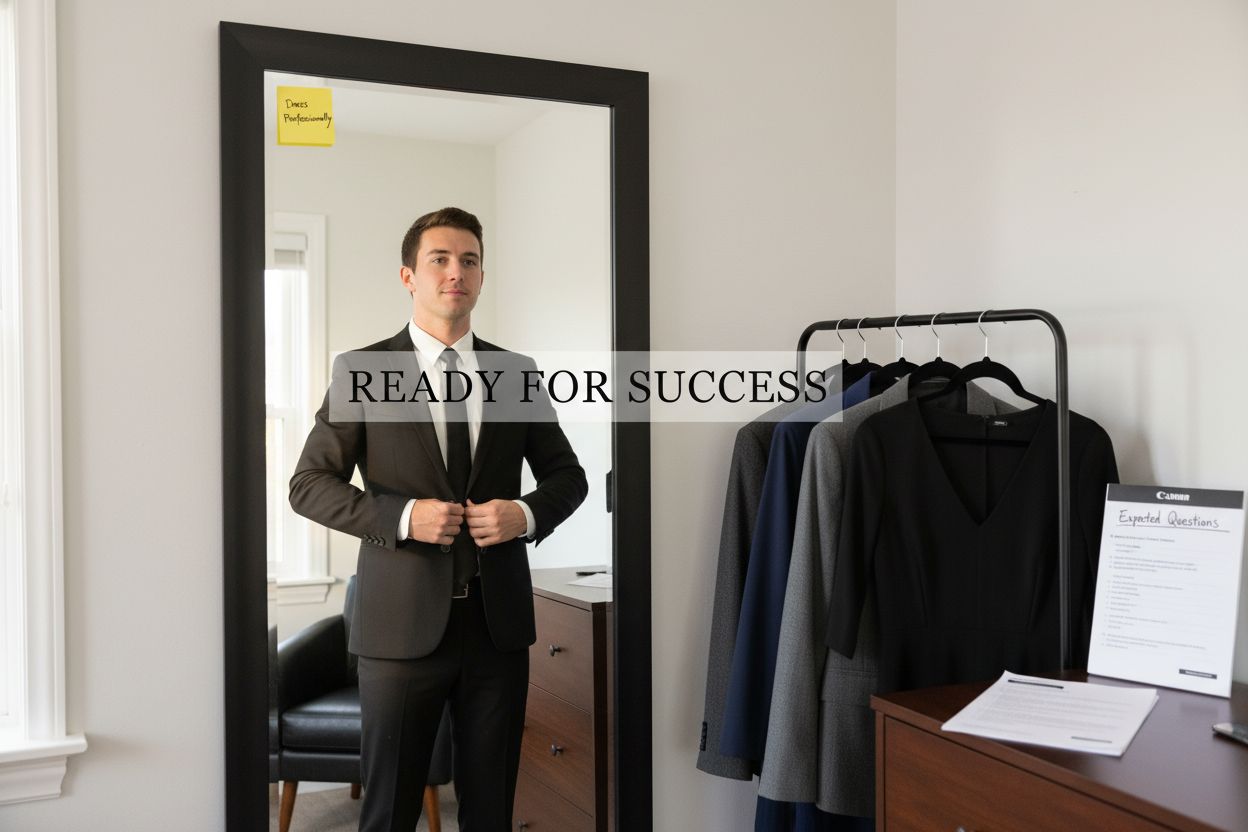
Step 4: Practice with Mock Interviews
Mock interviews are your secret weapon in transforming interview anxiety into confident performance. These simulated experiences bridge the gap between preparation and actual interview execution, allowing you to refine your communication skills, identify potential weaknesses, and develop a polished professional presentation.
Learn advanced virtual interview techniques to complement your in person practice. Begin by recruiting a trusted friend, mentor, or professional colleague who can provide honest, constructive feedback. Ideally, choose someone with hiring or interviewing experience who understands professional communication dynamics. If professional contacts are unavailable, consider working with a career coach who specializes in interview preparation.
Create a realistic interview environment during your mock sessions. This means dressing in your planned interview attire, setting up a professional background, and treating the practice session with the same seriousness you would an actual interview. Use a recording device or webcam to capture your performance, enabling you to review your body language, tone, and communication patterns objectively.
Structure your mock interviews to mirror real world scenarios. Have your practice partner use standard interview questions, unexpected curveball questions, and behavioral scenario prompts. Pay special attention to your nonverbal communication, including maintaining appropriate eye contact, managing nervous gestures, and projecting confident body language. Practice your responses using the STAR method, ensuring you provide concrete examples that demonstrate your skills and achievements.
Feedback is crucial in the mock interview process. After each practice session, request specific, actionable insights from your interviewer. Ask them to highlight moments where you seemed uncertain, used filler words, or could improve your storytelling. Listen openly to their observations without becoming defensive. Each critique is an opportunity to refine your professional presentation.
Consider these key focus areas during mock interview practice:
- Clarity and conciseness of your responses
- Ability to connect personal experiences to job requirements
- Confidence and energy in your communication
- Smooth handling of unexpected or challenging questions
- Overall professional demeanor and presentation
Remember that mock interviews are skill building exercises, not performance tests. Embrace moments of awkwardness or uncertainty as valuable learning opportunities. The more you practice, the more comfortable and authentic you’ll become in actual interview settings.
Approach each mock interview as a chance to discover and showcase the most confident, articulate version of your professional self.
Step 5: Verify Your Logistics for the Interview Day
The final preparatory stage of interview readiness focuses on meticulous logistical planning. This step transforms your careful preparation into a smooth, professional experience by eliminating potential day-of complications. Thorough logistics verification reduces anxiety and allows you to present your best self confidently.
Learn about avoiding common interview pitfalls to complement your logistical preparation. Begin by confirming every detail of your interview location and format. For in-person interviews, conduct a precise route reconnaissance. Use mapping applications to identify the exact address, estimate travel time, and anticipate potential traffic or parking challenges. If using public transportation, review schedules and identify backup routes to ensure punctual arrival.
For virtual interviews, technical preparation is paramount. Test your technology thoroughly at least 24 hours before the scheduled time. Verify your internet connection speed, ensure your computer’s camera and microphone function correctly, and download any required video conferencing software. Create a professional background space with neutral lighting, minimal background noise, and a clean, organized setting that reflects your professional demeanor.
Prepare a comprehensive interview day kit containing essential items. This should include multiple copies of your resume printed on high quality paper, a professional notebook and pen, identification documents, and contact information for your interview point of person. For virtual interviews, have a charger, backup device, and headphones readily available. Consider creating a digital folder with all necessary documents that can be quickly accessed if needed.
Time management is crucial on interview day. Calculate your travel or setup time and add a 30-minute buffer to account for unexpected delays. For virtual interviews, log in 10-15 minutes early to troubleshoot any potential technical issues. Research from professional career experts emphasizes the importance of arriving 10-15 minutes early to demonstrate reliability and reduce personal stress.
Key verification checklist for interview day preparation:
- Confirm exact interview time and time zone
- Verify interview location or virtual meeting link
- Charge all electronic devices
- Prepare printed and digital document copies
- Plan transportation and route
- Set backup alarm or reminder
Final logistical verification transforms potential stress into confident preparation. By anticipating and addressing potential challenges in advance, you create a foundation for a successful interview performance.
The following table condenses key logistical steps to verify before your interview, acting as a quick checklist to ensure a smooth and confident interview day experience.
| Verification Item | Details / Actions | Timing Recommendation |
|---|---|---|
| Interview Time & Time Zone | Double-check exact time and correct time zone | Day before & interview day |
| Location or Virtual Link | Confirm address or access link | Day before |
| Electronic Devices | Fully charge laptop/phone; bring charger or backup | Night before |
| Resume & Documents | Print multiple copies; have digital versions ready | Day before |
| Transportation & Route | Map directions, estimate travel time, plan parking | Day before |
| Backup Alarm/Reminder | Set alarm and reminder for early arrival/log-in | Night before |
| Interview Kit | Prepare ID, notebook, pen, and point-of-contact info | Day before |
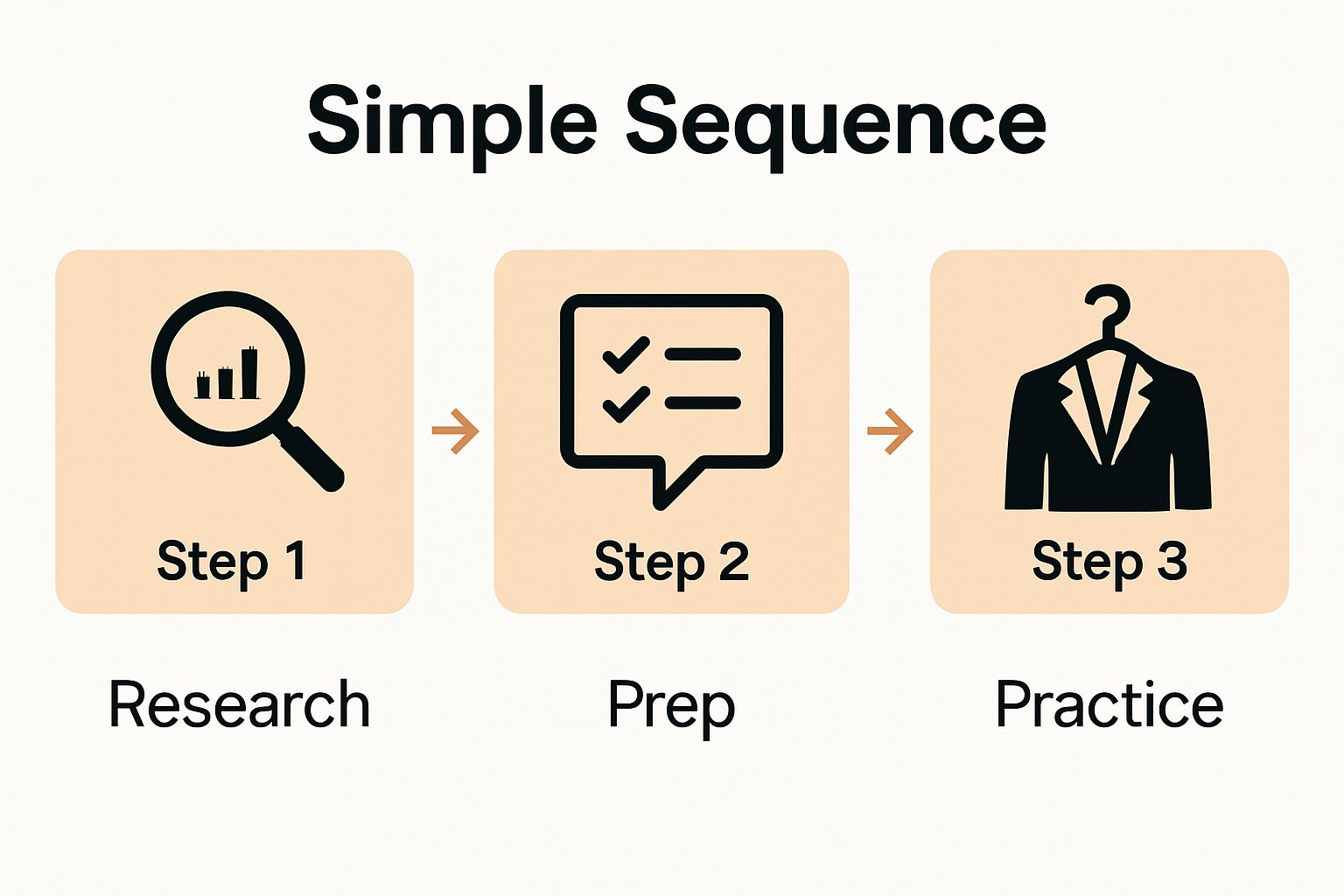 Remember that thorough preparation allows your professional skills and personality to shine without being undermined by preventable logistical complications.
Ready to Confidently Ace Your Next Interview?
If you are feeling overwhelmed by the details of interview preparation or worried about translating your unique skills into standout answers, you are not alone. Many job seekers struggle to confidently navigate company research, the STAR method, and behavioral questions. That uncertainty can cost you critical opportunities. The great news is you do not have to figure it out alone. At Career Coaching – Rezound Career Coaching, our certified coaches specialize in every step of the hiring process, from in-depth interview practice to professional appearance tips tailored for both virtual and in-person formats.
Picture yourself entering your next interview with clarity, a tailored plan, and powerful answers that highlight your value. Our expert-led coaching sessions address exactly what you just read—connecting your story with the employer’s goals, mastering both the STAR and PAR methods, and managing nerves before the big day. Do not let another opportunity slip away. Start personal coaching with us at https://rezoundcareer.com and take control of your career future. Your next job offer could be just one coaching session away.
Frequently Asked Questions
How can I effectively research a company before my interview?
Start by exploring the company’s official website, focusing on their mission statement, core values, and recent news. Additionally, leverage platforms like LinkedIn to gather insights about the company culture and the professional backgrounds of employees in similar roles.
What are common interview questions I should prepare for?
Common interview questions include “Tell me about yourself,” “What are your greatest strengths and weaknesses,” and “Why do you want to work here?” Prepare structured responses using the STAR method to clearly demonstrate your skills and achievements based on your experiences.
What should I wear to make a good impression during the interview?
Choose professional attire that aligns with the company culture, generally opting for well-fitted suits in neutral colors. Ensure your outfit is clean and pressed, and accessorize subtly to present a polished image.
How can I practice for my interview effectively?
Engage in mock interviews with a friend or mentor who can provide constructive feedback on your responses and body language. Aim to practice at least three sessions leading up to your interview to build confidence and refine your communication skills.
What are essential logistics to verify before interview day?
Confirm your interview time, location, and format, aiming to arrive 10-15 minutes early. Prepare a day-of kit with copies of your resume, a notebook, and any necessary documents to ensure you are fully prepared and reduce stress on the day of the interview.
How do I follow up after the interview?
Send a thank-you email within 24 hours to express appreciation for the interviewer’s time and reinforce your interest in the position. Mention specific points discussed during the interview to personalize your message and leave a positive impression.


